


For the latest numbers, see our Washington, DC Metro Real Estate Market Update, Fall 2026. By Real...
Free tools for investors
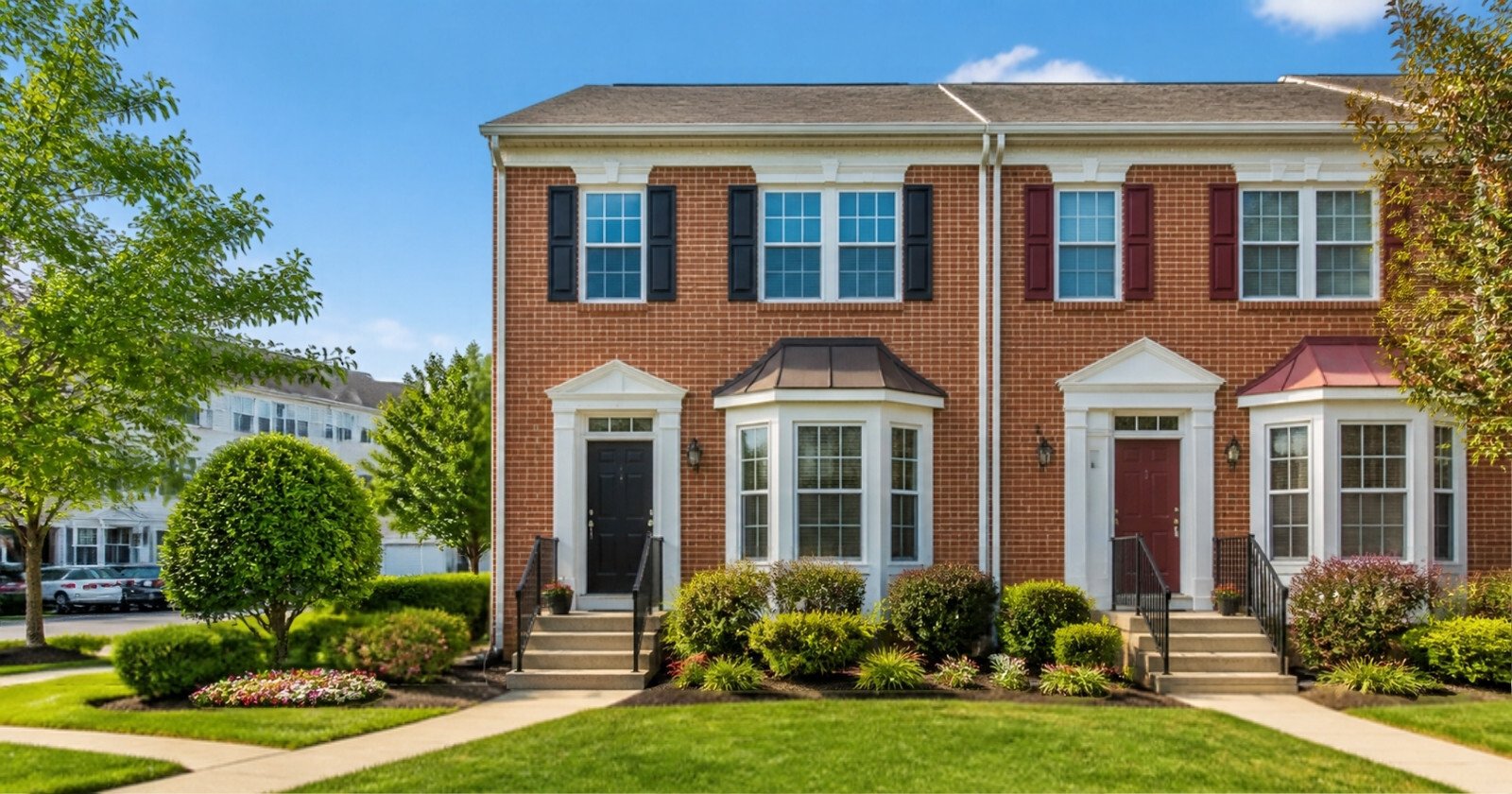
Real estate investor properties that fit your buy box are what we watch for every day. Tell us what you want to buy, and we will keep watching for it. Sharing your buy box with us is the most direct way for us to keep an eye out for you, because we work with a large number of properties at one time and cannot match what we do not know. We also actively look for sellers who will provide seller financing for investors interested in buy-and-hold deals, with the goal of obtaining financing below market rates. Only your name and email are required, and your spreadsheet is on its way within minutes.
Build my buy boxSeller financing for investorsPrice an offer
A six-tab spreadsheet
Your buy box, a Deal Analyzer with live formulas, a Property Scorecard, a transfer and recordation tax guide, a due diligence checklist, and next steps.
Share my buy box →The seller’s numbers
Estimated closing costs, transfer taxes, recording fees, and lender’s title insurance, with net proceeds for cash, financed, and owner-financed offers side by side.
Price an offer →An offer cover letter
A polished letter built from your terms, ready to edit, print, or send as a Word file, with a fair housing check built in.
Write my offer letter →Why sharing your buy box is the best way for us to keep an eye out for you
You already have a buy box. Every investor does: the price range, the communities, the condition you will take on, the financing, and the return you need before you say yes. It is a matter of sharing it with us, so we can watch for it every day.
Picture the way a skilled matchmaker works: she can only introduce you to someone when she knows what you are looking for. Properties are the same. Real Estate Search and Sale, LLC works with a large number of properties at any given time, and each one deserves a quick, honest answer to a simple question: is this right for any of our investors? A written buy box is how we answer it.
Once your buy box is on file with your contact information, we can compare each property that crosses our desk with your price range, communities, condition tolerance, financing, and return targets. Imagine opening your email to a property that already fits your numbers, with the math ready to review. A buy box does not guarantee a match, but investors who have told us exactly what they want are the ones we know to think of first.
- Build your buy box. Start with the basics. Add detail wherever you like, because every answer sharpens your matches and your spreadsheet.
- Receive your spreadsheet. It downloads right away and arrives by email, with a Deal Analyzer, a Property Scorecard, a closing cost guide, and a due diligence checklist.
- Let us watch for you. We save your buy box with your contact information and compare it with the properties and seller financing opportunities we see.
- Price an offer and move quickly. Use the offer calculator to show a seller the numbers, then let us represent you at every step through settlement.
Seller financing for buy-and-hold investors
Here is something we do on purpose. We actively look for sellers who will provide seller financing for investors who are interested in buy-and-hold deals, and we work to obtain financing below market rates for those investors. When a seller carries the loan, the down payment, interest rate, payment schedule, and final balance date are negotiated directly between buyer and seller, which is why the terms can sometimes beat what a bank offers.
How to put us to work on it
In the “How you buy” step of the buy box, tell us you would like us to look for seller financing, and add the down payment, interest rate, payment schedule, and final balance date you hope for. Then use the offer calculator’s owner financing option to show a seller what they receive at settlement, every month, and in total over the term. Imagine presenting a seller with a clear picture of steady monthly income alongside a polished cover letter.
What to keep in mind
Not every seller is open to financing, and each seller sets the terms, so availability, rates, and terms vary and are not guaranteed. Rules can also differ by state and by how the property will be used. Carolyn Thompson is a real estate broker, not an attorney or accountant. Please have your real estate attorney review any seller financing terms, and your accountant review the tax side, before you sign.
Investor buy box builder
This is how we keep an eye out for you. Work through the steps in any order, and your progress saves in this browser, so you can leave and come back. The more you tell us, the better we can match properties and seller financing opportunities, and the more useful your spreadsheet becomes.
Offer calculator and seller closing costs
Enter an address and your terms. See what the seller pays in transfer taxes, recordation taxes, and closing costs, what the seller nets, and then build a cover letter. Check more than one option to show the seller a choice.
Investment properties and real estate investment properties we watch for
Whether you call them investment properties, real estate investment properties, or investor properties, they all start the same way: a clear picture of what you want to buy. We watch for rental houses, townhomes, condos, and small multifamily buildings that fit your buy box, and we actively look for sellers who will provide seller financing for investors interested in buy-and-hold deals and in obtaining financing below market rates. Seller financing depends on each seller and each property, and no match is guaranteed.
How investors use a buy box
A buy box is a short, specific description of the property you will say yes to. It might read: a three-bedroom townhome in Rockville or Gaithersburg, priced from $400,000 to $600,000, needing light cosmetic work, with a monthly rent of at least 0.7% of the all-in cost, closing in 30 days with cash. Written down, it lets everyone who works for you move fast and stay on target.
Investors who use a precise buy box tend to see fewer irrelevant listings and make faster, cleaner offers. The Deal Analyzer in your spreadsheet turns the buy box into numbers: net operating income, cap rate, cash flow after the loan payment, cash-on-cash return, debt service coverage, and the maximum allowable offer for a flip. The Property Scorecard then checks each property you review against your criteria so you can compare them without starting over.
Real Estate Search and Sale, LLC represents investors at every step: finding properties that fit, negotiating the purchase, managing the transaction through settlement, and selling when your plan calls for it. We also provide property management for rentals. We can share contact information for licensed lenders, inspectors, contractors, attorneys, accountants, and title companies, and you are free to use any provider you choose.
Offers that sellers can compare
Sellers weigh more than price. They look at cash at settlement, timing, contingencies, and the chance the deal will close. The offer calculator shows a seller the transfer taxes, recordation taxes, and closing costs that come out of the proceeds, and how a cash offer, a financed offer, and an owner-financed offer compare. Owner financing can pay a seller a monthly income and a higher total price, and the calculator shows the down payment, monthly payment, final balance, and total received. Some owners prefer discretion and a private, off-market sale.
Markets we serve
The communities named here are a sampling of the many communities we serve. Investors often start in Montgomery County, Maryland, where communities such as Potomac, Bethesda, Chevy Chase, North Bethesda, Rockville, Silver Spring, Kensington, Gaithersburg, and Germantown each offer a different mix of housing, and amenities such as Pike and Rose and the Crescent Trail in Bethesda draw interest. In Frederick County, Maryland, investors look at Frederick, Urbana, New Market, Walkersville, and Thurmont. We also work in Washington, DC, Northern Virginia, and Blacksburg, Virginia, and we serve investors in West Virginia and Florida. The communities named here are a sampling of the many communities we serve.
How to underwrite an investment property: the metrics that matter
Underwriting means testing a property’s income against its costs before you offer. Five measures do most of the work, and the Deal Analyzer in your spreadsheet calculates each one.
- Net operating income (NOI): collected rent after vacancy, minus operating expenses (property tax, insurance, maintenance, management, reserves). Mortgage payments are not an operating expense.
- Cap rate: annual NOI divided by price (or all-in cost). It compares properties without regard to financing.
- Cash-on-cash return: annual cash flow after the loan payment, divided by the cash you invested (down payment, closing costs, repairs).
- Debt service coverage ratio (DSCR): NOI divided by annual loan payments. Many lenders want 1.20 to 1.25 or more.
- Gross rent multiplier and the rent-to-price ratio: quick screens only. They ignore expenses, so never rely on them alone.
A worked example: why the interest rate changes everything
This illustration uses round numbers, not market quotes or an offered rate. A townhome is priced at $450,000 and rents for $3,600 a month. After a 5% vacancy allowance, property tax, insurance, maintenance, management, and capital reserves, assume NOI of about $25,700 a year, a 5.7% cap rate. You put 25% down and borrow $337,500 over 30 years.
| Illustration | Loan at 7% | Loan at 5% |
|---|---|---|
| Annual loan payments | about $26,900 | about $21,700 |
| DSCR | about 0.95 | about 1.18 |
| Annual cash flow | about -$1,300 | about $3,950 |
| Cash-on-cash on about $126,000 invested | about -1.0% | about 3.1% |
The property and the rent are identical. Only the financing changed, and cash flow swung by roughly $5,200 a year. That is why we look for sellers open to carrying a loan at a rate below bank rates, and why we never promise one: each seller decides, and the numbers above are an example only.
Cash flow is not the only return
Investors also count principal paydown, appreciation, and tax treatment. Residential rental buildings are generally depreciated over 27.5 years under federal rules, which can reduce taxable income, and a Section 1031 exchange can defer tax on a sale if the replacement property is identified within 45 days and closed within 180 days. An installment sale, such as a seller-financed sale, can spread a seller’s taxable gain over the years payments arrive. These are planning topics to raise with your accountant, who can tell you how they apply to you.
Seller financing structures to ask your attorney about
Seller financing can take several forms: a purchase-money mortgage or deed of trust with a balloon payment, an interest-only period followed by amortization, or a step-up schedule. If the seller still owes a lender, the existing loan may contain a due-on-sale clause, which lets that lender demand payment when title transfers; federal law limits only certain exceptions. Federal consumer lending rules can also apply when the buyer will live in the home. Your attorney should draft or review the note, the security instrument, and the title work before you sign.
Investor representation: purchase strategy, finance strategy, and pre-closing marketing
We do more than help you locate and purchase a property. Before you make an offer, we talk through purchase and finance strategies with you: cash, financed, and seller-financed structures, how each changes your cash flow or flip profit, and which fits your plan. Then we represent you every step of the way.
Flipping a property? We start preparing to market it before you close
When we represent an investor who is flipping a property, we begin preparing to market it before you go to closing on the purchase, so the home is ready when the work is done. We can order professional photography and floor plans and prepare marketing materials, and we can share contact information for licensed service providers such as junk haulers, appraisers, and contractors. You are free to use any provider you like, and Real Estate Search and Sale, LLC does not receive payments from service providers whose contact information we share. We do all we can to prepare the marketing before the property goes on the market. Any public marketing follows your contract, your signed agreement with us, and MLS rules.
Neighbor open houses and open houses on weekdays and weekends
We hold neighbor open houses, which invite the people nearest the property to see the finished work, and open houses on both weekdays and weekends, so buyers with different schedules can visit. Results vary, and nothing here guarantees a price or a timeline.
Ten benefits of owner financing for investors and buyers
Owner financing, also called seller financing, means the seller carries all or part of the loan. We actively look for sellers open to it, because for the right investor or buyer it can open doors that a conventional loan does not. Terms vary from seller to seller and nothing here is guaranteed, but these are the benefits investors and buyers tell us matter most.
- A rate that can come in below market. The interest rate is negotiated between you and the seller, so in some deals it lands below what lenders are charging. Finding those sellers is exactly what we work toward for you.
- A flexible down payment. You and the seller decide the down payment together, which can leave more of your capital available for repairs, reserves, or your next purchase.
- Payment structures built around the property. Interest-only periods, a longer amortization with a balloon payment, or a step-up schedule can be shaped to the rent the property earns or to your plan for the property.
- Fewer lender requirements. There may be less paperwork than a bank loan, because the seller sets the requirements rather than an underwriting department.
- A path to a faster settlement. Without a lender’s timeline, appraisal, and committee review, a closing can move as quickly as the buyer, seller, and title company are ready.
- Lower lender fees. Origination and processing charges that come with a bank loan may be smaller or absent, which the Closing Costs Guide tab in your spreadsheet helps you compare.
- Room to grow your portfolio. Some lenders limit how many financed properties one borrower can hold. Seller-financed purchases can add properties without using up those limits, subject to what your other loan documents allow.
- An option for properties lenders hesitate to finance. A home that needs work, or one with unusual features, can be easier to finance with a seller who knows it well.
- Answers from the person who knows the property best. Before you commit, you can ask the seller about the building’s repair history, the tenants, and its quirks. Those answers can help you underwrite more accurately, budget for repairs, and avoid surprises after settlement.
- A seller with a reason to work with you. A seller who receives monthly income and interest has a stake in a smooth, lasting deal, which can make the negotiation friendlier and open the door to terms that fit your plan. Our offer calculator shows the seller exactly what they would receive, so you can present your terms clearly.
Seller financing has rules of its own. Federal and state laws can apply, the seller’s existing mortgage may have a due-on-sale clause, and the requirements can change when the buyer plans to live in the home rather than rent it. Carolyn Thompson is a real estate broker, not an attorney or accountant, so please have a real estate attorney review the note, the deed of trust or mortgage, and any other seller-financing documents, and ask your accountant about the tax side. The Consumer Financial Protection Bureau is a federal source for plain-language information on the rules that apply to loans secured by homes.
Six benefits of a cash offer
- Certainty of closing, because there is no loan approval to wait for.
- A shorter timeline, since no lender appraisal or underwriting stands between you and settlement.
- Fewer contingencies, which many sellers find reassuring.
- Lower closing costs, because there are no lender fees or lender’s title policy.
- Strong negotiating position when a seller needs a quick, simple sale.
- Flexibility to refinance later, once the property is repaired and rented, and recover capital for the next purchase.
Six benefits of a financed offer
- Leverage: a smaller amount of your own money controls the whole property, so you can buy more properties with the same capital.
- Cash-on-cash return can rise when the property earns more than the cost of borrowing.
- You keep cash on hand for repairs, reserves, and the next opportunity.
- Mortgage interest on a rental property is generally deductible, so ask your accountant how it applies to you.
- Predictable monthly payments make cash flow easy to plan, especially with a fixed rate.
- Long terms spread the cost of the property over many years of rent.
Each path can be the right one for a different property. The offer calculator lets you build all three, check them against the seller’s numbers, and send the seller a choice. The seller decides which offer to accept, and we represent you through the negotiation. For financed purchases, expect a lender appraisal, an inspection, title work, and an insurance binder before settlement. Call the 24-Hour Appointment Desk at 202-630-5070 to talk through your buy box with an Accredited Buyer’s Representative (ABR).
Places investors often ask about
The communities named here are a sampling of the many communities we serve. We describe places, never people, and we encourage every investor to visit a community and research it personally.
- Bethesda, Montgomery County, Maryland. Bethesda Row brings shops, restaurants, and a cinema together along Bethesda Avenue, and the Capital Crescent Trail gives walkers and cyclists a paved path toward Georgetown.
- North Bethesda, Montgomery County, Maryland. Pike and Rose pairs shops, restaurants, and a live music venue with apartments and offices near the Metro.
- Rockville, Montgomery County, Maryland. Rockville Town Square surrounds a central plaza with dining, a library, and an arts venue, and sits near the Metro and MARC stations.
- Silver Spring, Montgomery County, Maryland. Downtown Silver Spring centers on Ellsworth Drive and Veterans Plaza, with restaurants, outdoor events, and the AFI Silver Theatre.
- Gaithersburg, Montgomery County, Maryland. The Kentlands neighborhood is organized around Main Street shops and restaurants, with ponds and walking paths nearby.
- Frederick, Frederick County, Maryland. Historic Downtown Frederick features brick-lined streets, local restaurants and shops, and Carroll Creek Linear Park winding through the center.
- Potomac, Montgomery County, Maryland. The C&O Canal National Historical Park and Great Falls on the Maryland side offer trails, the towpath, and views of the Potomac River.
- Washington, DC. Neighborhood corridors, the National Mall and its museums, and Rock Creek Park draw interest from investors who follow rental demand near transit.
- Blacksburg, Virginia. The Virginia Tech campus and the Huckleberry Trail shape the town, and rentals near campus are a common focus for investors.
Add the counties and communities you want to your buy box. If your list is longer than this sampling, that is welcome. We serve many more communities than the ones named here.
How the seller’s numbers help you win the offer
Sellers rarely accept the highest number on paper. They accept the offer that nets them the most, closes the most reliably, and asks the least of them. Transfer taxes, recordation taxes, settlement fees, payoff charges, and title insurance all come out of a seller’s proceeds, and many sellers have never seen them added up. When you show a seller their estimated net on a cash offer, a financed offer, and an owner-financed offer side by side, you give them something every seller wants: clarity.
The offer cover letter turns those numbers into a simple, courteous note. It tells the seller what you are offering, why the terms are easy to say yes to, and how the closing will work. It stays on the property and the transaction, so the seller can focus on what matters most to them. Because we represent you at every step, we can walk your offer through the negotiation, the inspection period, and settlement, and help you plan the sale later when your strategy calls for it.
Frequently asked questions
What are investment properties?
Investment properties are real estate bought to earn income or profit rather than to live in, such as rental houses, townhomes, condos, and small multifamily buildings. Tell us your buy box and we watch for investment properties that fit your price range, communities, and financing.
What are real estate investment properties, and how do I find them?
Real estate investment properties are the homes and buildings investors buy to hold for rent, renovate and sell, or both. A written buy box on file with Real Estate Search and Sale, LLC lets us compare each new property with your criteria, including properties where a seller may consider seller financing.
What are real estate investor properties?
Real estate investor properties are homes, townhomes, condos, and small multifamily buildings bought to earn rent, appreciation, or both, whether you plan to buy and hold, renovate and sell, or both. Your buy box describes the investor properties you want, and Real Estate Search and Sale, LLC watches for the ones that fit.
What is a buy box in real estate investing?
A buy box is the written list of criteria a property must meet before you will make an offer: location, price range, property type, size, condition, financing, and the return you need. Agents, lenders, and sellers use it to send you properties that fit and to skip the ones that do not.
Why does a detailed buy box help me find deals faster?
Deals that fit a specific buyer move quickly, often before they are widely seen. When we know your price range, communities, condition tolerance, closing speed, and return targets, we can say yes or no to a property in minutes instead of days. The more precise the buy box, the better the matches.
How does my buy box help you keep an eye out for me?
We work with a large number of properties at one time, and the written buy box is how we know which ones to bring to you. It sits next to your contact information, so each property we review can be compared with your price range, communities, condition, financing, and return targets. A buy box does not guarantee a match, but it tells us exactly who to think of when one appears.
What is seller financing, and why do buy-and-hold investors want it?
With seller financing, the seller carries all or part of the loan instead of a bank. The down payment, interest rate, payment schedule, and final balance date are negotiated between buyer and seller. Some buy-and-hold investors prefer it because the terms can be more flexible, and in some deals the rate can come in below what banks are charging.
Do you look for sellers who will provide seller financing?
Yes. We actively look for sellers who are open to seller financing for investors who plan to buy and hold, and we try to obtain financing below market rates for those investors. Every seller decides for themselves, so availability, rates, and terms vary and are not guaranteed. Telling us in the buy box that you want seller financing is how we know to look for it for you.
Can you promise a below-market interest rate?
No. Seller financing terms are set by each seller and agreed with each buyer, and no one can promise a rate in advance. What we can do is look for sellers who are open to it, present your terms clearly, and represent you through the negotiation.
Do seller financing rules change depending on the buyer or the property?
They can. Rules differ by state, and they can differ when the buyer will live in the home compared with buying it as a rental investment. Carolyn Thompson is a real estate broker, not an attorney. Have a real estate attorney review any seller financing terms before you sign.
What happens after I submit my buy box?
Your spreadsheet downloads right away and is emailed to you, and a copy comes to us. We read your answers, save them with your contact information, and use them to match properties and seller financing opportunities. We text before we call, and you choose how often you hear from us.
What should a buy box include?
The basics are location, price range, property type, bedrooms, bathrooms, square footage, and year built. The details that separate a useful buy box from a vague one are condition and rehab budget, deal-breakers, financing method, minimum cap rate and cash-on-cash return, closing speed, earnest money, and how you handle inspections. The builder above walks you through all of them.
Is the buy box builder free, and what do I get?
Yes, it is free. You receive a six-tab spreadsheet: your buy box, a Deal Analyzer with live formulas, a Property Scorecard that checks each listing against your criteria, a transfer and recordation tax guide, a due diligence checklist, and next steps. It downloads right away and is emailed to you.
How are the seller’s transfer taxes and recording fees estimated?
Transfer and recordation taxes are calculated from published county, city, and state rates, per $500 of price where the law requires it. Settlement, payoff, release, and recording charges are shown as typical ranges. Your settlement company issues the exact figures, so treat the calculator as a close planning estimate.
Who pays transfer and recordation taxes in Maryland?
In Maryland the parties may agree on who pays. In many transactions the buyer and seller split the state transfer tax, the county transfer tax, and the recordation tax evenly. For a qualifying first-time Maryland homebuyer, the state transfer tax is 0.25% and the seller pays it. The calculator lets you test who pays, because that choice changes the seller’s net.
Who pays in Washington, DC and Virginia?
In Washington, DC the seller customarily pays the deed transfer tax and the buyer customarily pays the deed recordation tax. In Virginia the seller pays the grantor tax, plus a regional fee in Northern Virginia, and the buyer pays the grantee recordation tax. Contracts can change these customs.
Who pays transfer taxes in West Virginia and Florida?
In West Virginia the seller customarily pays the state excise tax of $1.10 per $500 and the county excise tax, which is 55 cents, $1.10, or $1.65 per $500 depending on the county, plus a $20 fee. In Florida the seller customarily pays the documentary stamp tax on the deed, $0.70 per $100 in most counties and $0.60 per $100 for a single-family home in Miami-Dade County, while the buyer customarily pays the stamp and intangible taxes on a new loan. Contracts can change these customs, and your title company confirms the exact figures.
Do you work with investors in West Virginia and Florida?
Yes. Carolyn Thompson is licensed in Maryland, Virginia, Washington DC, West Virginia, and Florida, and the buy box and offer calculator include West Virginia and Florida. Tell us the counties or cities you want in the buy box.
What is lender’s title insurance, and who pays for it?
A lender’s title policy protects the lender’s loan against title defects. When a buyer finances, the buyer customarily pays for it, often at a reduced rate when it is issued together with an owner’s policy. The calculator shows an estimated range so the seller sees the full picture. Your title company quotes the premium.
Can I offer owner financing, and how does the calculator show it?
Yes. Choose the owner financing option and enter the down payment, interest rate, amortization, and the year the balance comes due. The calculator shows the cash the seller receives at settlement, the monthly payment, the balance at the end, and the total received over the term. Have a Maryland real estate attorney review any owner-financing terms before you sign.
Should I send a cover letter with my offer, and what should it say?
A clear, professional cover letter helps a seller see the strength of your terms: certainty of closing, a settlement date that suits them, and a simple process. Keep it about the property and the transaction. Leave out family details, religion, and other personal characteristics, which can create fair housing concerns for the seller. The letter builder flags those words for you.
Can I use these tools if I live outside the area or outside the country?
Yes. Remote closings for out-of-state and overseas parties are a specialty of ours. Check the remote closing box in the buy box and we will plan the logistics around you.
How does Real Estate Search and Sale, LLC work with investors?
We represent you at every step: finding properties that fit your buy box, negotiating the purchase, and selling when your plan calls for it. We have more than 20 years of experience. We can provide contact information for licensed service providers such as lenders, inspectors, contractors, attorneys, accountants, and title companies. You are free to use any provider you like, and Real Estate Search and Sale, LLC does not receive payments from service providers whose contact information we share. A list of references is provided on request.
Do you give legal, tax, or accounting advice?
No. Carolyn Thompson is a real estate broker, not an attorney or accountant. The tools provide planning estimates and checklists. Ask your attorney about contract terms, entity structure, and owner financing, and ask your accountant about tax questions, including a 1031 exchange.
How accurate are the numbers?
Tax rates reflect published figures as of fall 2026 and change from time to time. Fees, title premiums, and rates are estimates. Always confirm figures with your settlement company and lender before you rely on them.
Where DMV rents are moving in 2026: what government data shows
Three public sources give investors a grounded starting point. The U.S. Bureau of Labor Statistics Consumer Price Index for the Washington-Arlington-Alexandria area, released October 14, 2026, shows the rent of primary residence index up 1.2% over the 12 months ending in September 2026. The owners’ equivalent rent index rose 3.4% and overall shelter rose 4.1%. The index tracks rents paid across a sample of rental homes, so it can differ from what a new tenant pays today.
The U.S. Department of Housing and Urban Development publishes Fair Market Rents, effective October 1, 2026 for fiscal year 2027. For the Washington-Arlington-Alexandria area, which includes Washington, DC and Maryland’s Charles, Frederick, Montgomery, and Prince George’s counties, the two-bedroom figure is $2,438 and the three-bedroom figure is $3,107. HUD describes these as estimates of the 40th percentile gross rent paid by recent movers into standard-quality units, so they are a benchmark and not an asking-rent forecast.
In Montgomery County, the Department of Housing and Community Affairs reported in its February 2026 rent stabilization report about 114,000 licensed rental units as of December 31, 2025, with 65,669 of them (57%) subject to rent stabilization. For stabilized units, the annual rent increase is capped at the consumer price index plus 3% or 6%, whichever is lower, and the fiscal year 2026 maximum was 5.7%. Properties built before 2003 are covered as of January 1, 2026. The county also publishes survey data in its rental marketplace. Ask your attorney how these rules apply to a property before you set rents.
These are area-wide figures, not a forecast for any property. We can pull rental comparables for the specific home and county you are considering.
Talk with us
Call the 24-Hour Appointment Desk at 202-630-5070. We are open 24 hours, and we text before we call, so feel free to text first.
A list of references is provided on request.
Real Estate Search and Sale, LLC. Estimates on this page are for planning only and are not legal, tax, or accounting advice. Carolyn Thompson is a real estate broker, not an attorney or accountant. Rates and fees change; confirm them with your settlement company and lender. Real Estate Search and Sale, LLC does not receive payments from service providers whose contact information we share.
Wire fraud alert
Criminals target real estate transactions with emails and texts that appear to come from agents, title companies and lenders. Real Estate Search and Sale, LLC never sends wiring instructions by email or text. Before you wire any money, call your title company or settlement attorney at a phone number you have verified independently, never one taken from an email or text, to confirm the instructions. If you suspect fraud, contact your bank and the title company right away.